
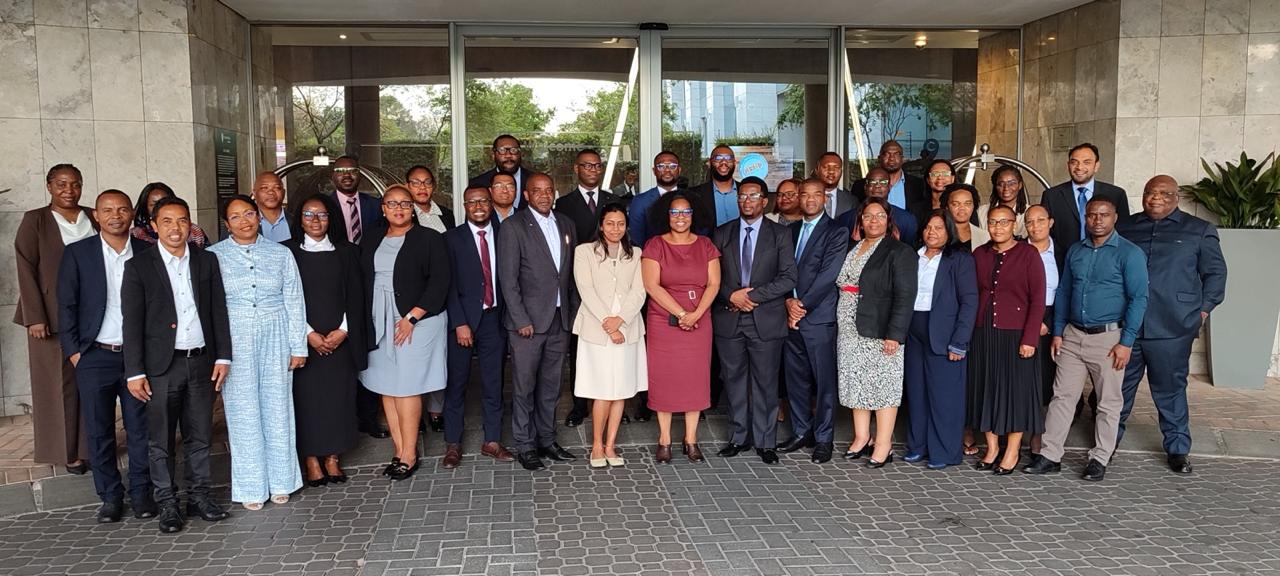
The Southern African Development Community (SADC) Tax Working Group met from 28 September to 2 October 2026 in Johannesburg, South Africa, bringing together Member States and the SADC Secretariat to advance regional cooperation on taxation and strengthen support for sustainable domestic revenue mobilization.
Under Tax Incentives, the Working Group reviewed implementation of the SADC Guidelines on Tax Incentives and assessed developments across 15 participating Member States. Discussions highlighted continued use of tax holidays, reduced corporate tax rates, investment allowances, accelerated depreciation, customs and VAT relief, and sector-specific incentives to attract investment, promote employment, support exports and advance economic diversification. At the same time, Member States recognised the importance of measuring revenue forgone, strengthening monitoring and evaluation, improving transparency, and introducing systematic reviews and sunset provisions. The Working Group agreed to strengthen National Frameworks for Monitoring Tax Incentives and promote evidence-based approaches to tax expenditure management.
On Tax Agreements, the Working Group reviewed progress towards operationalising the SADC Agreement on Assistance in Tax Matters (AATM) and strengthening the regional Double Taxation Avoidance Agreement (DTAA) Network. With the required signature threshold for the AATM already achieved, attention focused on securing the five additional ratifications required for entry into force. Member States also reviewed ongoing and planned DTAA negotiations and renegotiations, emphasising the need to modernise older agreements, protect taxing rights, strengthen institutional capacity and align treaty policies with evolving international tax standards.
The Indirect Tax discussions addressed taxation of digital services, VAT administration and the SADC UNIVISA Project. Member States exchanged practical experiences on VAT digital services VAT, highlighting simplified registration, taxpayer engagement, risk-based compliance and proportionate enforcement. The Working Group also reviewed the proposed UNIVISA revenue-sharing model and VAT treatment of selected supplies against the SADC minimum VAT benchmark.
The meeting concluded with concrete action points, including strengthened tax expenditure reporting, accelerated AATM ratification, improved DTAA monitoring, targeted capacity building, finalization of the UNIVISA revenue-sharing framework, and enhanced regional cooperation on VAT and digital taxation.


